Entering a photo contest is one of the most exhilarating milestones in a photographer’s creative journey. It is more than just an opportunity to win prizes or secure shiny badges for your portfolio; it is a powerful catalyst for artistic growth, global exposure, and industry validation. Yet, many incredibly talented photographers find themselves overlooked year after year. The difference between a winning submission and an ignored entry rarely comes down to sheer gear specifications or technical perfection. Instead, success lies in understanding visual storytelling, rigorous self-curation, and the psychology of the judging panel.
Decoding the Competition Brief and Rules
Before you even open your editing software to prepare your files, you must thoroughly analyze the competition brief. Every prestigious contest has a specific set of rules, themes, and technical constraints. Misinterpreting these guidelines is the single most common reason high-quality submissions are disqualified before they even reach the final jury round.
Understanding the Theme and Creative Constraints
Is the competition looking for literal interpretations or abstract concepts? A category labeled “Street Life” demands a vastly different emotional tone and compositional style than one titled “Urban Solitude.” Take the time to research past winning galleries of the contest you are targeting. This research, often discussed in-depth on educational platforms like Digital Photography School, gives you invaluable insight into the aesthetic sensibilities of the organization and its recurring judges. Pay close attention to technical specifications such as color spaces (usually sRGB), file size limits, and rules regarding digital manipulation.
“A contest-winning image doesn’t just show us what something looks like; it makes us feel what it felt like to be there. Technical execution is merely the baseline; emotional resonance is what secures the podium.”
The Art of Brutal Self-Curation
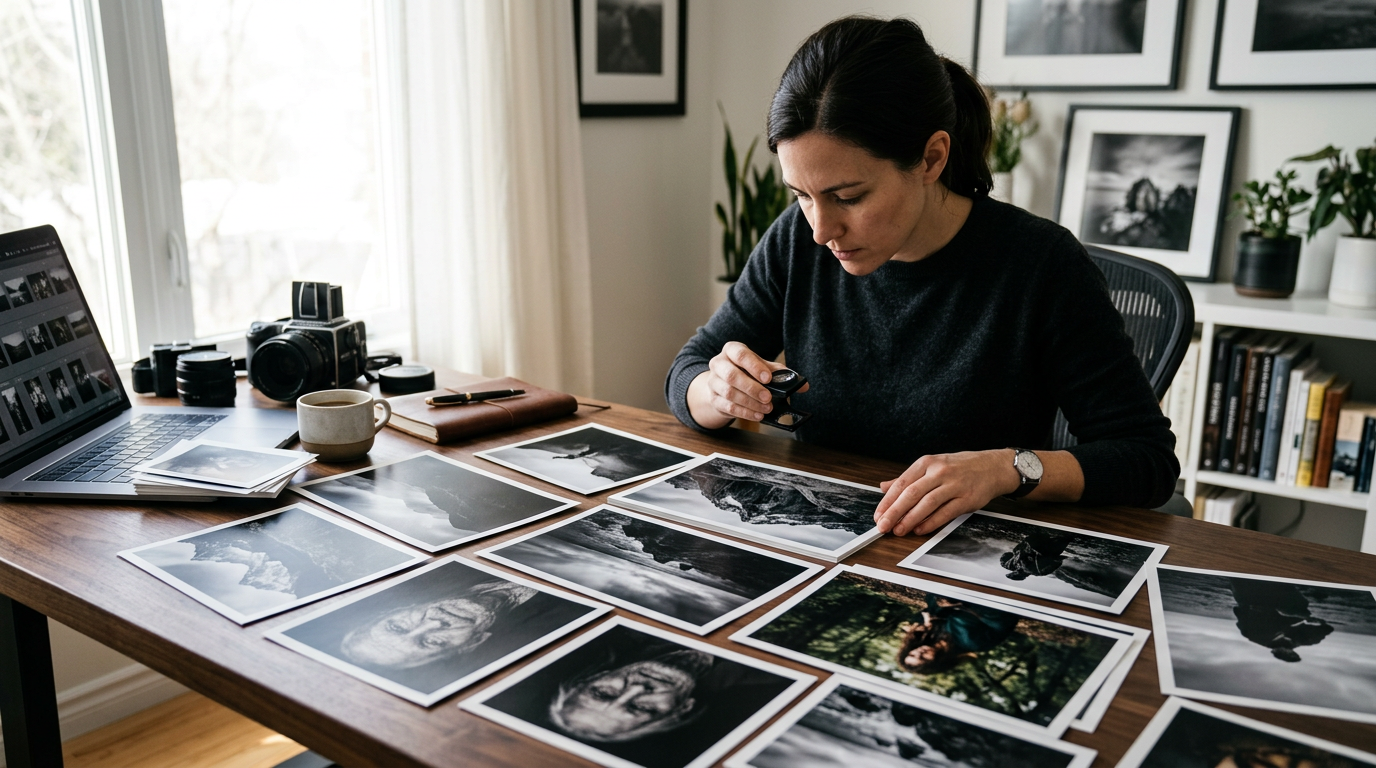
The hardest part of entering photography competitions is choosing which images to submit. Photographers are naturally biased toward their own work because they remember the effort, travel, and emotional connection associated with taking the shot. However, a contest judge has no connection to your personal memories. They only see the final pixels on their screen.
To curate your work effectively, you must detach your emotions from your portfolio. Ask yourself these critical questions:
- Does this image tell a complete story in a single frame without requiring a lengthy caption?
- Is the composition clean, or are there distracting background elements that weaken the main subject?
- Does this photo bring something fresh and unique to a common subject, or does it look like a postcard?
- Is the technical execution—specifically focus, exposure, and color balance—impeccable?
Technical Execution and Presentation Standards
Even the most breathtaking composition can be undermined by poor post-processing or careless presentation. Industry experts at PetaPixel frequently emphasize that over-sharpening, excessive HDR effects, and unnatural saturation are immediate red flags for professional judges. Keep your edits clean, believable, and serving the story of the image rather than distracting from it.
Optimizing for the Digital Judging Screen
Most modern photography contests are judged on high-resolution, color-calibrated monitors. To ensure your image looks exactly as you intended, calibrate your monitor regularly and export your files using the exact color profile requested in the submission guidelines. If the contest allows metadata, ensure your titles and captions are poetic yet informative, adding context without over-explaining the visual narrative.
Leveraging Feedback and Navigating Rejection
Entering competitions is a long-term game. Even world-renowned photojournalists and commercial photographers face countless rejections before landing a major award. Use each submission as an educational diagnostic tool. Compare your non-winning entries with the images that took home the top prizes. Analyze their lighting, composition, and storytelling elements to understand what caught the jury's eye. For deep-dive technical reviews and gear discussions that can help elevate your image quality to competitive standards, resources like DPReview offer exceptional benchmarks.
Ready to put your skills to the test? The best way to improve is through active participation. Explore the diverse, curated Framez competitions today, submit your finest work, and join a global community of passionate creators pushing the boundaries of visual art. Your next award-winning shot is waiting to be shared with the world!
Try this in Framez — enter a photography competition and put "Photography competitions: how to enter and improve your chances" into practice.
Framez is the photography competition app — share your work, climb the leaderboard, and learn from the community.