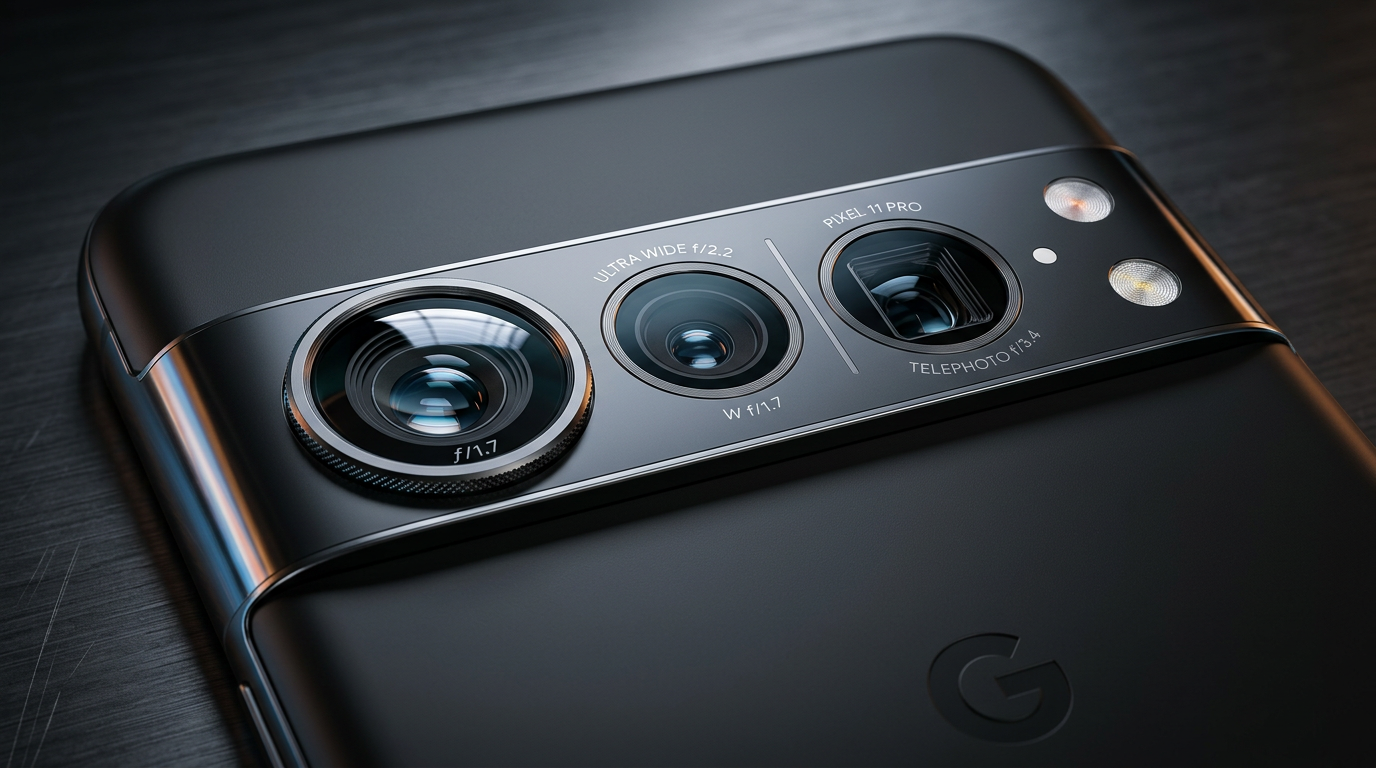
For years, mobile photography has existed in a delicate balance between physical optics and computational wizardry. Google’s flagship devices have traditionally leaned heavily on the software side of that equation. However, with the release of the Google Pixel 11 Pro, the tech giant has delivered a masterclass in combining substantial hardware upgrades with cutting-edge, on-device artificial intelligence. Powered by the new Tensor G6 silicon, this device marks a paradigm shift in how we capture, process, and think about mobile imagery, offering serious tools that challenge traditional mirrorless workflows in everyday scenarios.
The Hardware Leap: A Giant Telephoto Sensor
While the highly capable 50 MP main sensor (f/1.68) and 48 MP ultrawide (f/1.7) continue to deliver exceptional dynamic range, the true star of the Pixel 11 Pro hardware suite is the completely redesigned 48 MP telephoto module. Google has expanded the optical sensor size from the previous 1/2.51-inch to a massive 1/1.95-inch, resulting in a staggering 30% increase in native light sensitivity.
This physical expansion fundamentally changes the camera's behavior in challenging conditions. The larger sensor, combined with the Tensor G6’s 50% increase in TPU compute, powers "Instant Night Sight," allowing low-light captures to execute up to 4.5 times faster than previous generations. According to detailed sensor analysis on DPReview, this physical light-gathering advantage reduces the camera's reliance on aggressive noise reduction, preserving finer organic details like hair, fabric textures, and distant foliage.
Unlocking the 5x Portrait Mode
The larger telephoto sensor also introduces a newly unlocked 5x Portrait Mode. By utilizing the central crop of the high-resolution 48 MP sensor alongside advanced depth-mapping algorithms, the Pixel 11 Pro renders incredibly natural fall-off and realistic bokeh. Unlike the artificial, cutout look of early smartphone portrait modes, the transition from tack-sharp subject to creamy background mimics the compression of a dedicated 135mm focal length on a full-frame system.
"Computational photography is no longer about fixing bad hardware with aggressive algorithms; it is about pairing large, light-hungry sensors with intelligent processing to capture moments that were previously impossible on a pocketable device."
Magic Capture and the Death of the Shutter Button
Perhaps the most revolutionary software feature debuting on the Pixel 11 Pro is "Magic Capture." Photographers have long struggled with the compromise between shooting high-quality video and capturing the perfect, high-resolution still frame. Magic Capture solves this dilemma entirely by utilizing the raw power of the Tensor G6 chip.
When recording video, the on-device Gemini AI analyzes roughly 400 frames per second in real-time. The system automatically identifies peak action, expressions, and compositionally sound moments, instantly generating pristine 12-megapixel RAW and JPEG still photos. It automatically applies intelligent cropping, perspective correction, and advanced unblurring algorithms to ensure these extracted frames look identical to dedicated stills. This shifts the photographer's role from timing a single shutter click to directing a continuous stream of visual data.
Pro-Grade Creative Control: Camera Looks and Advanced Video
For purists who prefer to establish their creative voice before pressing the shutter, Google introduces "Camera Looks." This feature moves away from generic post-capture filters, allowing photographers to define, customize, and save precise color profiles, tone curves, and contrast rendering directly within the live camera feed. This real-time preview matches the tactile, intentional shooting experience praised by communities like Fstoppers, where pre-visualization is key to professional workflows.
On the video front, the Tensor G6 enables a suite of high-end capabilities:
- 8K Video Boost: Record stunning 8K video at 24/30 fps, processed via Google's cloud pipeline for unmatched detail.
- 4K 10-bit HDR: Capture cinematic color grading options natively at up to 60 fps.
- Pro Stable Video: High-frequency gyro data paired with AI predictive framing creates gimbal-like stability.
- Instant Night Sight Video: Real-time frame stacking brings incredible clarity to low-light videography.
Practical Tips for Maximizing the Pixel 11 Pro
To get the absolute most out of this pocket powerhouse, try incorporating these professional shooting habits into your daily workflow:
- Trust the 5x Zoom in Low Light: Do not hesitate to use the telephoto lens in dim environments. The new 1/1.95-inch sensor handles shadow detail beautifully without excessive noise.
- Build Custom Camera Looks: Spend time creating 2-3 signature "Camera Looks" for different lighting scenarios (e.g., moody high-contrast street, warm golden hour portraits) to establish a cohesive style.
- Use Magic Capture for Action: When shooting fast-moving subjects like pets or sports, shoot in video mode and let the Tensor G6 curate your gallery of high-resolution stills.
- Shoot in RAW+JPEG: The computational RAW files produced by Google’s HDR+ pipeline offer incredible latitude. For advanced editing techniques, consult guides on Photography Life to master mobile RAW development.
Conclusion: A New Era of Mobile Imaging
The Google Pixel 11 Pro is more than an incremental smartphone upgrade; it is a glimpse into the future of image creation. By pairing a massive, light-sensitive telephoto sensor with the unprecedented computational power of the Tensor G6 chip, Google has created a tool that respects the fundamentals of optics while pushing the boundaries of what software can achieve.
Are you pushing the limits of what your smartphone can capture? Put your skills to the test and showcase your best work by joining the global community in our upcoming Framez competitions. Submit your best shots, receive feedback from industry professionals, and see how your mobile masterpieces stack up against photographers worldwide on Framez today!


