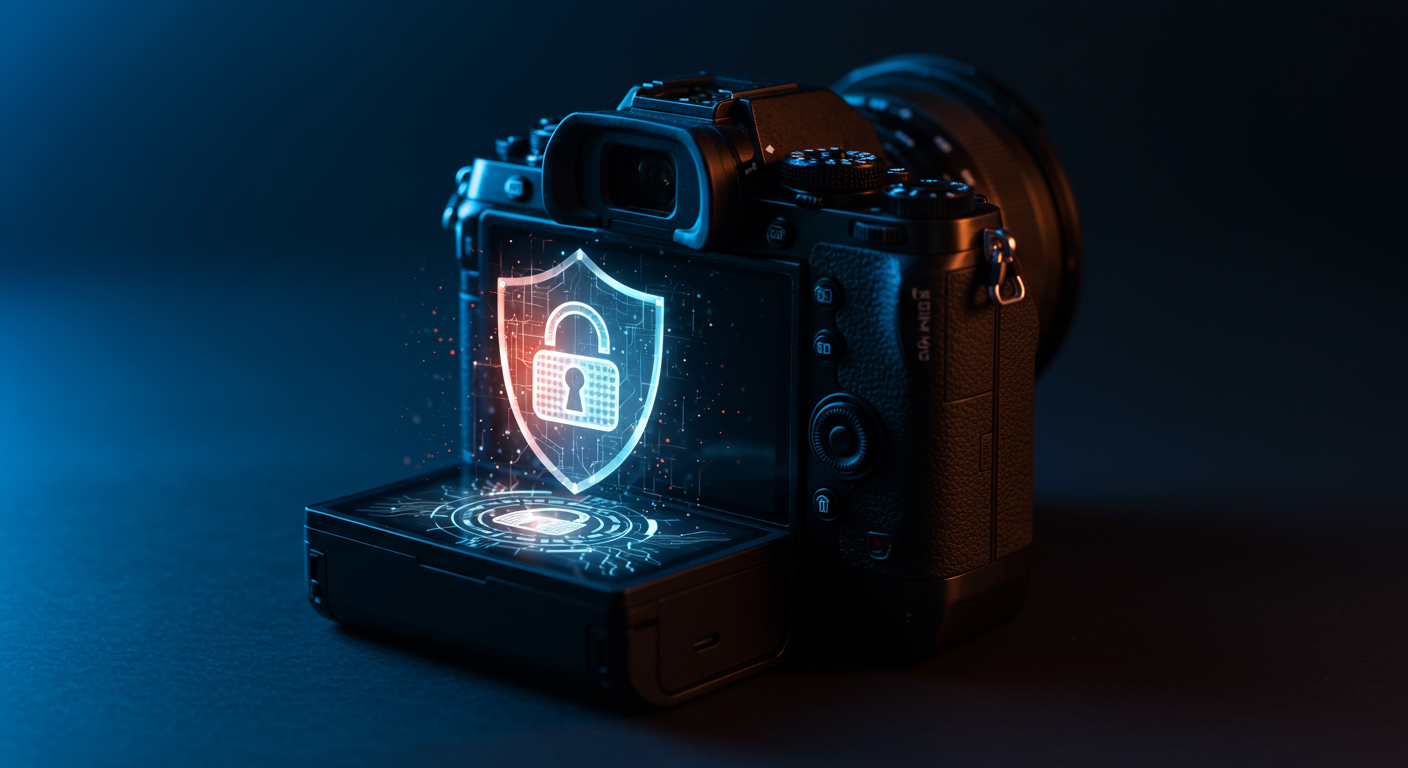
In an era where generative artificial intelligence can synthesize photorealistic masterpieces in seconds, a quiet revolution is happening inside our camera bodies. The photograph, once regarded as an indisputable record of physical reality, has faced an existential trust crisis. However, as of May 2026, the global photography industry is fighting back with cryptography. The weapon of choice is not a watermark or a restrictive digital rights management system, but the cryptographic camera—a new generation of hardware designed to seal the authenticity of an image at the exact millisecond the shutter curtain opens.
The 2026 Milestone: Canon, Sony, and the C2PA Rollout
The movement toward secure image provenance has officially transitioned from experimental firmware to mainstream reality. In a landmark move, Canon has officially rolled out its Authenticity Imaging System across Europe, the Middle East, and Africa. Built on the open standards of the Coalition for Content Provenance and Authenticity (C2PA), this system marks the first massive, multi-region deployment of hardware-level digital signatures for consumer and professional photographers alike.
By utilizing secure enclaves built directly onto camera image processors, manufacturers are now able to cryptographically sign metadata at the point of capture. This digital signature acts as an unalterable birth certificate for your RAW and JPEG files, documenting the exact camera model, serial number, sensor data, capture time, and GPS coordinates before any external software can touch the file.
"In a world where seeing is no longer believing, cryptographic provenance is not about restricting creativity—it is about empowering photographers to prove their reality."
How Content Credentials Protect Your Work
At the heart of this technological shift is Content Credentials, an open-source standard spearheaded by the Adobe-led Content Authenticity Initiative (CAI). When you take a photo with a cryptographic camera, a secure manifest is attached to the file. As that file moves from your memory card to Lightroom, and eventually to the web, every edit, crop, or export is appended to an immutable ledger.
The Anatomy of a Secure Image Ledger
When an image with Content Credentials is uploaded online, viewers can click a small "CR" icon in the corner of the image to inspect its history. This ledger shows a clear, verifiable chain of custody:
- Asset Genesis: Verifies the image was captured on a physical sensor (e.g., a Canon EOS R5 II or Sony A9 III) and not generated by AI.
- Edit History: Lists the software used to process the image (such as Photoshop or Capture One) and details whether pixels were added, removed, or modified.
- Author Identity: Optionally links the photographer's verified digital signature or social profile to the file, securing intellectual property.
This level of transparency is quickly becoming essential for photojournalists working with major wire services. For an in-depth look at how these ethics translate to the field, check out our guide on photojournalism ethics at PetaPixel.
Practical Tips: Preparing Your Workflow for C2PA
As cryptographic cameras become the standard, photographers must adapt their workflows to maintain this chain of trust. Whether you are shooting breaking news or preparing your portfolio for Framez competitions, here is how you can prepare for the C2PA transition:
- Enable Hardware Signing: Check your camera's security settings to ensure that native C2PA or Authenticity signatures are toggled "On" during capture.
- Maintain the Chain in Post: Use C2PA-compliant editing software like Adobe Lightroom or Photoshop, making sure to enable "Content Credentials" in your export settings.
- Understand Platform Compatibility: Be aware of which social media networks and portfolio sites preserve metadata. Platforms that strip metadata during upload will break the cryptographic chain.
- Educate Your Clients: Explain the value of verified files to commercial clients and news editors, positioning yourself as a forward-thinking, reliable professional.
The Future of Trust in Photography
While the initial push for C2PA has been driven by photojournalists and news agencies determined to combat misinformation, the implications for creative photographers are equally profound. As AI models continue to train on scraped web data, having a verifiable, cryptographic receipt of human authorship will be a critical asset for commercial artists looking to protect their copyrights. To keep up with the latest hardware reviews and industry shifts, explore the detailed breakdowns on Digital Photography School.
Ultimately, the cryptographic camera does not limit what we can create; instead, it draws a clear, verifiable line between computational synthesis and physical light captured through glass. By adopting these tools today, we safeguard the value of our craft for tomorrow.
Ready to showcase your authentic, human-captured imagery? Join the conversation, share your latest work, and enter our themed photography competitions at Framez today to connect with a global community dedicated to the art and truth of photography.


