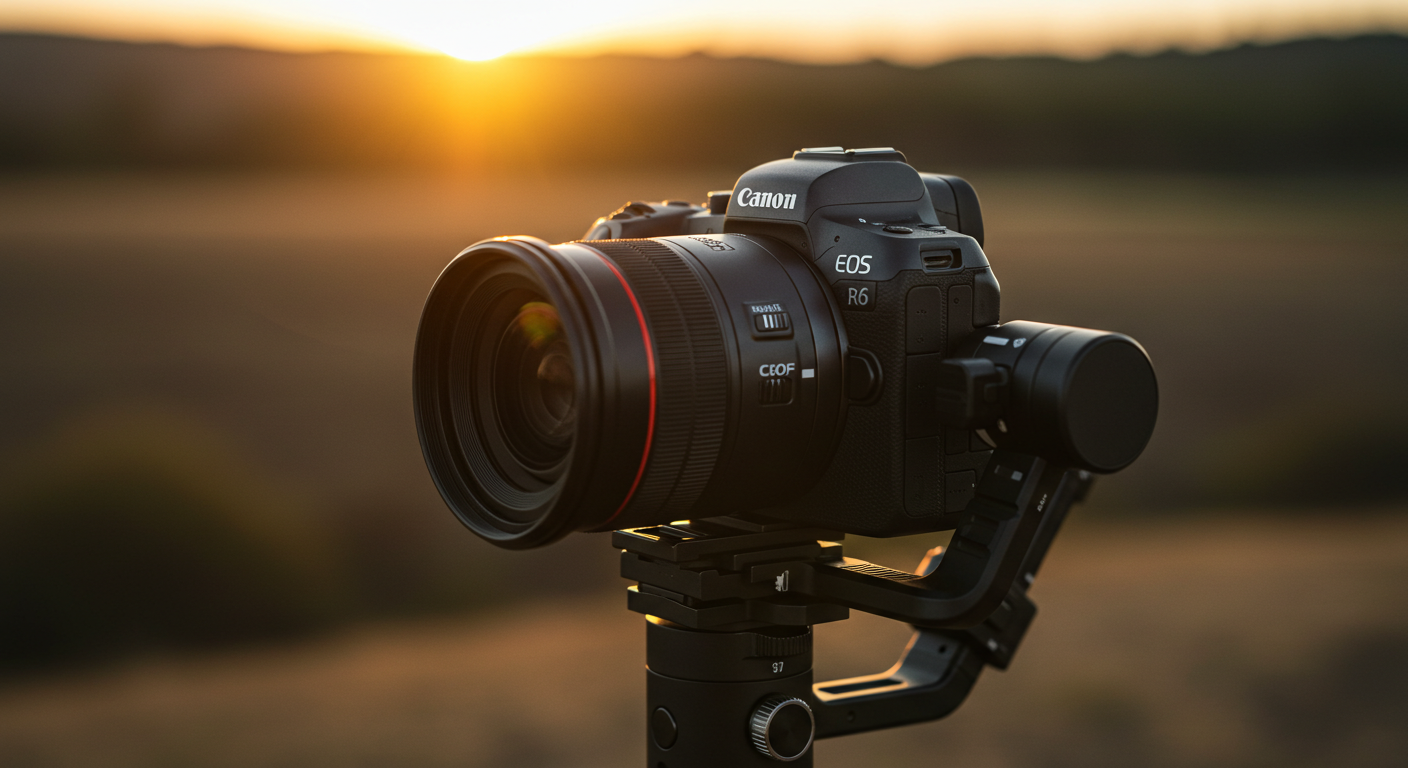
In the rapidly evolving landscape of visual storytelling, the boundary between photography and high-end cinema has officially dissolved. Canon’s latest release, the Canon EOS R6 V, represents a radical departure from traditional camera design. Officially launched at $2,499 USD, this machine is not just another incremental update; it is a bold, video-forward reimagining of what a mid-range full-frame camera can be. By stripping away legacy components like the electronic viewfinder (EVF) and the mechanical shutter, Canon has crafted a streamlined, boxier powerhouse tailored specifically for solo filmmakers, vertical content creators, and agile production teams who demand uncompromising performance without the bulk.
The Bold Design Shift: Goodbye EVF, Hello Thermal Efficiency
The first thing you notice about the Canon EOS R6 V is its striking, minimalist silhouette. By removing the EVF and mechanical shutter entirely, Canon has optimized the physical footprint for modern gimbals and rig integration. This design choice directly addresses the needs of creators who rely on external monitors or the camera's fully articulating touchscreen. But the true engineering marvel lies beneath the surface: a built-in active cooling fan system.
For years, mirrorless shooters have battled the dreaded overheating warning during long summer shoots. The R6 V solves this pain point completely. Thanks to its active thermal management, the camera can record heavy formats—including oversampled 4K/60p and intensive 7K RAW—for over two hours continuously without breaking a sweat, even in warm ambient environments. According to hands-on analysis from DPReview, this thermal stability makes the R6 V one of the most reliable workhorses in its price bracket.
"The removal of the mechanical shutter and EVF isn't a compromise—it's a declaration of intent. Canon is building tools for a generation of creators who view the world through a monitor and demand absolute thermal reliability."
Unleashing the Power of 7K Open Gate RAW
At the heart of the EOS R6 V is the same highly acclaimed 32.5-megapixel full-frame CMOS sensor and DIGIC X processor found in the hybrid EOS R6 III and the cinema-focused EOS C50. However, the R6 V utilizes this silicon to unleash spectacular video capabilities that will make indie filmmakers sit up and take notice.
The Power of Flexible Aspect Ratios
The headline feature is undoubtedly the 12-bit 7K open gate RAW recording at up to 30p (and 7K RAW Light up to 60p) in a native 3:2 aspect ratio (6960 x 4640). Shooting open gate utilizes the entire surface area of the full-frame sensor. For modern multi-platform creators, this is a game-changer. It allows you to capture a single high-resolution clip and easily crop it into a traditional widescreen 16:9 format for YouTube, and a vertical 9:16 format for social media platforms, without losing precious resolution or composition quality.
For high-speed action, the camera also supports uncropped, oversampled 4K at up to 120p and a blistering 2K at 180p, delivering silky-smooth slow motion. Professional colorists will appreciate the inclusion of Canon Log 3, ensuring seamless integration into multi-camera cinema workflows alongside established cinema lines as detailed on B&H Explora.
Engineered for the Solo Shooter: Stabilization and Power Zoom
Operating as a solo shooter requires gear that acts as an extension of your body. The EOS R6 V is packed with ergonomic and mechanical features designed to make run-and-gun filmmaking effortless. Chief among these is the 5-axis in-body image stabilization (IBIS) system, which delivers up to 7.5 stops of shake correction. When paired with stabilized RF lenses, handheld footage looks remarkably fluid, mimicking the look of a physical gimbal.
The camera body also introduces a physical zoom lever positioned intuitively around the shutter button. This lever is designed to control Canon’s expanding lineup of Power Zoom lenses, including the newly launched RF 20-50mm f/4 L IS USM PZ—Canon's first full-frame switchable power zoom lens. This integration allows for smooth, cinematic focal transitions that were previously impossible without complex external follow-focus rigs.
Getting the Most Out of Your Video-First Setup
To truly maximize the potential of this active-cooled revolution, creators should optimize their media and rigging choices. Here are some essential tips for setting up your EOS R6 V for success:
- Leverage the Dual Slots Wisely: The camera features dual card slots—one high-speed CFexpress Type B and one UHS-II SD. Use the CFexpress slot for demanding 7K RAW recording, and configure the SD card to capture proxy files or backup 1080p footage simultaneously.
- Embrace the Power Zoom: Pair the camera with the RF 20-50mm f/4 L IS USM PZ lens to take advantage of the physical zoom lever for precise, repeatable focal pulls during live recording.
- Utilize Full-Size HDMI: Avoid fragile Micro-HDMI connections. The R6 V’s robust full-size HDMI port ensures a secure connection to external monitors and wireless transmitters on busy sets, a feature highly praised by industry experts at Fstoppers.
- Master the Open Gate Workflow: When shooting in 7K RAW 3:2, use the camera's on-screen aspect ratio guides to compose your shots with both horizontal and vertical crops in mind.
Conclusion: Join the Revolution
The Canon EOS R6 V represents a bold, uncompromising step forward. By shedding the weight of traditional photography components and embracing active cooling and open-gate flexibility, Canon has built the ultimate tool for modern visual storytellers. Whether you are filming cinematic documentaries, commercial projects, or high-end social media campaigns, this camera gives you the freedom to create without limitations.
Are you ready to showcase your cinematic eye and push your creative boundaries? Head over to the global Framez competitions to share your latest visual projects, connect with an inspiring community of filmmakers and photographers, and test your skills against the best in the industry. Join Framez today and elevate your craft!


